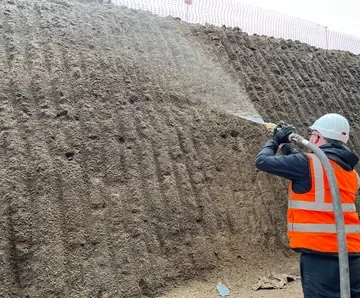
Hydroseeding vs. Hydromulching: Using neutral mulch for a natural look
Hydroseeding and hydromulching promote rapid grass growth and help prevent erosion, but neutral mulch avoids noticeable green hues and produces a more subtle result. Neutral mulch, such as uncolored wood fibers or cellulose, retains its natural beige or brown hue and fades gradually without dyes. These options are suitable for projects where aesthetics are a priority, such as urban areas or gardens.
Neutral mulch in hydromulching
When hydromulching with neutral mulch, fibers without dyes are added to the mulch, creating a light, reflective layer that retains moisture and cools the soil. Products such as NATURAMULCH Topsoil, NATURAMULCH Barren Soils, or HYDROMULCH HM-EC are pH-neutral, biodegradable, and ideal for sensitive soils. They do not have the usual green tint, giving the areas an immediate natural and integrated appearance.
Advantages of a neutral color
Subtle: blends seamlessly into its surroundings, perfect for temporary or permanent use.
Environmentally friendly: no dyes means fewer synthetic ingredients; the mulch is completely biodegradable.
Performance benefit: The light color reflects sunlight, reduces evaporation, and promotes germination on slopes.
Neutral vs. colored versions
| Aspect | Neutral Mulch | Colored Mulch (Green) |
|---|---|---|
| color | Neutral beige/brown | Instant Greenery |
| Request | Aesthetic, urban locations | Temporary markings at construction sites |
| Environment | No dyes, fully biodegradable, harmless to the soil | Contains dyes; breaks down more slowly |
| Fades away | Fast and discreet | The color fades over time |
| Costs | the same | the same |
Practical applications
Use neutral hydromulch on slopes, road shoulders, or retention basins that require erosion protection without altering the color. Combine this with hydroseeding for flat lawns and add adhesives for better adhesion. Result: faster growth, less maintenance, and seamless integration into the landscape